
Muzz: Where Muslims Marry
MuzzSocial
4.42.70K Reviews
- Version
- 8.89.0a
- Installs
- 10.00M
- Age Rating
- Mature 17+
Screenshots


Our Review of Muzz: Where Muslims Marry
 Analysis by Appyee
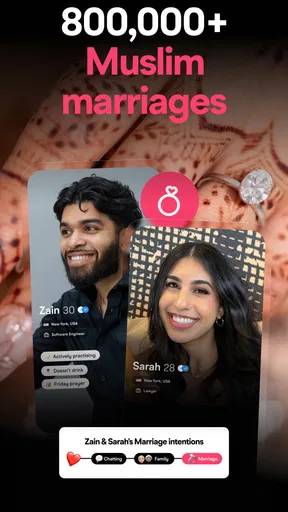
I approached Muzz as more than another swipe-based social app. Its purpose is much narrower and, for the right person, much more useful: it is a Muslim-focused dating app built around the possibility of marriage. That focus changes how I read profiles, start conversations, and judge whether a match is worth my time. I did not expect it to feel like a general dating service with a religious label added on top, and that is its biggest strength.
My overall view is positive, but with an important condition. This is a good choice if you want your faith, intentions, and family expectations to be part of the conversation from the beginning. It is a weaker fit if you want casual dating, a huge variety of relationship goals, or an experience that feels completely unstructured. Muzz works best when I use it deliberately rather than treating it as an endless stream of profiles.
How the marriage-focused approach changes the experience
The app sits in the social category, but I would not use it in the same way as a broad social network. The developer is Muzz, and the service is designed specifically for Muslims who are looking for a spouse. That distinction matters because the questions that usually arrive later in dating—religious practice, family involvement, location, marriage timing, and personal boundaries—can become relevant much earlier here.
In my experience, that focus makes browsing more efficient. I am not trying to guess whether someone wants a serious relationship or simply a conversation. The context encourages people to present themselves with marriage in mind. It does not remove uncertainty, of course, and a profile can never replace a real conversation, but it gives the first interaction a clearer purpose than I often find on mainstream dating apps.
The audience is also large enough to make the concept practical. Muzz has passed 10 million installs and holds an average rating of 4.4, which suggests that the idea has reached well beyond a small niche. I would still expect the quality of matches to depend heavily on my city, age range, language, and preferences. A large overall audience does not guarantee a deep local pool, but it does make the app more promising than a little-known specialist service.
The age classification is Mature 17+, which feels appropriate for a dating platform intended for adults and serious relationship discussions. I would still advise younger users to think carefully about privacy and emotional boundaries. A mature rating is not a substitute for good judgment, especially when moving from an in-app conversation to contact outside the service.
Profile browsing with a clearer purpose
The most useful shift is psychological: I found myself paying attention to compatibility instead of just presentation. Photos still matter, as they do anywhere, but I looked more closely at how a person describes their religious outlook, lifestyle, location, and expectations. That makes the profile stage less about collecting matches and more about deciding whether a conversation has a reasonable foundation.
A practical way to use the app is to define my non-negotiables before I start matching. For example, I might decide that location, willingness to involve family, and expectations about marriage timing are important, while hobbies and appearance remain flexible. This prevents the common dating-app habit of matching first and discovering basic incompatibilities several conversations later.
I also found it helpful not to treat every match as a potential spouse immediately. The marriage goal gives conversations direction, but it can also create pressure. A sensible approach is to use the first exchanges to establish basic compatibility, then move toward more meaningful subjects when both people seem comfortable. That balance keeps the app purposeful without turning every message into an interview.
Conversations that can move beyond small talk
Muzz is at its best when I use its context to ask questions I might otherwise postpone. What does practicing Islam look like in everyday life? How important is family involvement? Does the person want to marry soon, or are they only beginning to explore the possibility? These are not questions I would ask immediately in every social setting, but they are reasonable here because the app’s central purpose is clear.
One everyday scenario shows where it can save time. Imagine I am working full-time, living in a large city, and do not want to spend weeks chatting with someone whose plans are completely different from mine. I can begin with a respectful message about intentions, then discuss practical matters such as distance, family expectations, and the pace of a serious relationship. If the answers do not align, ending the conversation early is kinder and more efficient than prolonging vague flirtation.
That does not mean I would recommend sending a checklist as the opening message. People are still people, not applications to approve. I would start with something personal from the profile, then introduce one meaningful question naturally. The strongest conversations I had were the ones that combined ordinary warmth with clear intentions.
Privacy, boundaries, and the pace of trust
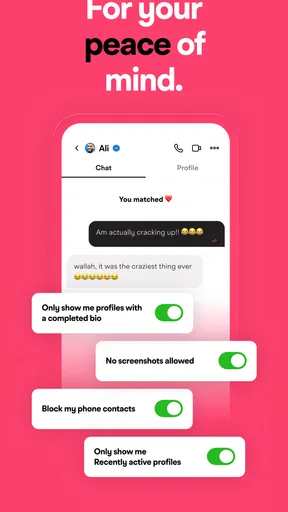
A marriage-oriented app can encourage openness, but it can also tempt users to reveal too much too quickly. I would keep identifying details limited at first: workplace specifics, home address, financial information, and private family matters do not belong in early messages. Even when someone appears sincere, trust should be built gradually.
I would also be cautious about moving the conversation elsewhere simply because a match asks. Staying inside the app while learning basic facts gives me more control over the pace. If I eventually involve family members or arrange a meeting, I would do so intentionally and in a setting that feels safe and appropriate. The app can help begin a connection, but it cannot verify character for me.
One useful habit is to reread a profile before replying after a few days. It is easy to remember a flattering photo and forget a detail that affects compatibility. Revisiting the profile helps me notice whether I am attracted to the actual person’s stated goals or merely reacting to the excitement of receiving a match.
The strongest reasons I would recommend it
The first advantage is relevance. A Muslim user who wants marriage does not have to explain the entire reason for being on the platform before the conversation can become serious. That shared starting point can be especially valuable for people who feel uncomfortable with the casual tone of general dating apps.
The second is efficiency. Because the app is associated with a specific relationship goal, I can filter my attention more intelligently. I still need patience, but I spend less energy decoding whether someone is looking for commitment at all. That is a meaningful benefit for anyone who has already become tired of unclear intentions.
The third is cultural and religious context. Compatibility is not only about personality and attraction. For many Muslim users, marriage also involves family, community, religious practice, and expectations about daily life. A specialist app gives those topics more room than a mainstream service usually does.
The fourth is accessibility. Muzz is free to download and use as an entry point, which lowers the barrier for someone who wants to explore the service before committing money. The app does include in-app purchases ranging from $0.99 to $229.99 per item, so I would not assume every useful option is included without charge. I would first learn the basic experience, then decide whether any paid feature genuinely solves a problem I have.
The current version is 8.89.0a, and the app supports Android 8.0 or later. That makes it accessible on many older Android phones, although anyone using an older device should still keep expectations realistic about performance and system compatibility. On iOS, the same general question applies: the quality of the experience depends not only on the service but also on how current and reliable the phone is.
Where the experience becomes frustrating
The marriage focus is also the app’s main limitation. It can feel intense for people who want to meet someone naturally without discussing long-term intentions early. If I am looking for casual dating, friendship first, or a broad social experience, I would probably feel constrained here. The app is not trying to be all things to all users, and that is better understood as a design boundary than a flaw.
Another weakness is that a shared label does not guarantee shared practice. Two users may both identify as Muslim while having very different views about religious observance, gender roles, family involvement, geography, or the timeline for marriage. The app can create a relevant starting pool, but I still have to do the difficult work of asking respectful, specific questions.
There is also a risk of over-optimizing the process. When profiles and messages are treated like a sequence of decisions, users may reject someone too quickly for a minor difference or continue chatting because the profile looks ideal on paper. I found that the best approach was to use the app to narrow the field, not to make a final judgment before meeting or involving trusted people.
Paid options can add another layer of friction. Since purchases are available at several price points, some users may feel pressure to pay in order to improve their chances or speed up the process. My advice is to set a firm budget before buying anything and judge a feature by a specific need. Paying cannot create mutual interest, improve someone’s character, or replace a thoughtful profile.
The size of the wider user base can also create uneven results. In a place with many active Muslim singles, browsing may feel productive. In a smaller town or for a narrow set of preferences, I might see fewer suitable matches and need to widen my distance or wait longer. That is a common challenge for specialist dating services, but it matters more when the app’s purpose is so specific.
Who should use it, and who should choose something else
I would recommend Muzz to a Muslim adult who is genuinely open to marriage and wants religious identity to be part of the matching context. It is particularly suitable for someone who prefers intentional conversations, has clear boundaries, and is willing to discuss practical compatibility rather than relying only on chemistry.
It may also suit a person whose family or community plays an important role in marriage decisions. The app does not remove the need for those conversations, but it can make it easier to find people who understand why they matter. Someone living far from a large Muslim community may also appreciate having a wider starting point than their immediate social circle.
I would be more cautious about recommending it to a person who is undecided about marriage, uncomfortable with faith-related questions, or hoping for a purely casual experience. A mainstream dating app may be better for broad discovery and flexible relationship goals. A general social network may be better for friendship or community participation. Muzz is strongest when the user’s objective already matches its central purpose.
I would also suggest skipping it if I were not prepared to handle rejection, slow replies, and conversations that end after an apparent connection. A focused app can improve relevance, but it cannot guarantee availability or emotional maturity. The service is a tool for meeting people, not a shortcut around patience.
My practical way to get better results
I would begin with a profile that explains what I want without sounding like a contract. A short, specific description of my personality, daily life, and approach to marriage is more useful than a string of broad compliments. I would choose photos that look current and natural, because trust starts with accurate expectations.
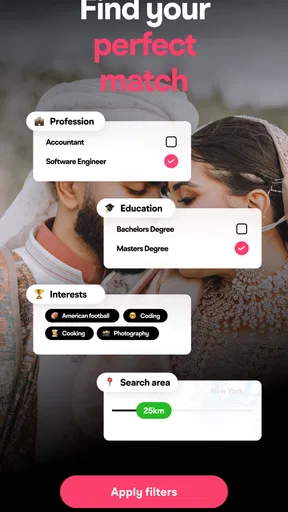
Next, I would set a small number of meaningful filters and avoid making the list impossible. Location and core expectations may deserve priority, while minor preferences can wait until I learn more about a person. This helps preserve promising matches that might be overlooked by an overly rigid search.
For messages, I would use a three-stage rhythm. First, respond to something individual in the profile. Second, ask a light question that reveals personality. Third, if the exchange feels comfortable, introduce one serious topic such as marriage timing or family involvement. This workflow keeps the conversation human while still respecting the app’s purpose.
When a match seems promising, I would not let the chat continue indefinitely without progress. After enough basic conversation, it is reasonable to discuss a safe next step, whether that means a call, a public meeting, or involving trusted family. The exact pace should belong to both people, but indefinite messaging can create an imagined relationship that has never been tested in real life.
I would also use the free experience long enough to understand my local results before considering purchases. If I am not finding compatible people, paying more will not necessarily solve the underlying issue. I might instead adjust distance, review my profile, be more flexible about secondary preferences, or take a break and return with clearer expectations.
My final assessment
Muzz succeeds because it makes a clear promise and generally keeps the user’s attention on that promise: meeting Muslims with marriage in mind. In my view, that is more valuable than trying to imitate every feature of a mainstream dating platform. The focused audience, serious tone, and space for faith and family discussions make it a practical option for the right user.
At the same time, I would not present it as a guarantee of compatibility or a replacement for personal judgment. Profiles can be incomplete, intentions can change, and a shared religious identity does not erase differences in personality or expectations. The app works best when I treat it as a structured introduction rather than a verdict about anyone.
With more than 335 thousand ratings and a mature, established presence, it has enough reach to be worth trying for Muslims who want a marriage-focused route to meeting someone. My recommendation is straightforward: use it if you want clarity, patience, and faith-aware conversations; choose a broader alternative if you want casual discovery or a less defined relationship goal. For its intended audience, it is a thoughtful starting point, provided I stay realistic about what an app can—and cannot—do.
Verdict
Strengths of Muzz: Where Muslims Marry
- Designed specifically for Muslims seeking marriage, not casual dating.
- Detailed profiles help users share faith, values, and marriage intentions.
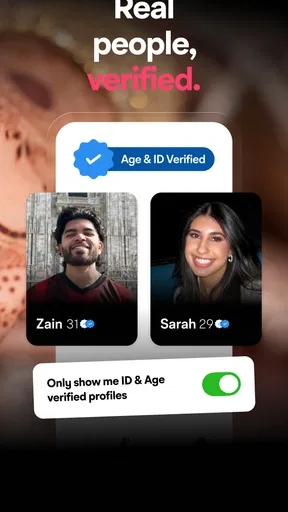
- Privacy tools can help limit unwanted attention and protect personal details.
- Optional chaperone features support more traditional introductions.
- Available across many countries, offering access to a broad Muslim community.
Limitations of Muzz: Where Muslims Marry
- Many useful features require a paid subscription or in-app purchases.
- The quality and seriousness of profiles can vary between users.
- Matching options may feel limited in areas with a smaller Muslim population.
- Some conversations may become repetitive before a genuine connection develops.
- Users should remain alert for fake profiles, scams, or misleading information.
Similar Picks in This Category
View All
Meta Platforms, Inc.4.6

Instagram4.0

Likee-Live, Chat & Party Games
Likeme Pte. Ltd.4.4

Facebook Lite
Meta Platforms, Inc.4.5

TikTok - Videos, Shop & LIVE
TikTok Pte. Ltd.4.0

Moj: Free Short Drama & Reels
ShareChat4.1
Frequently Asked Questions
What is Muzz: Where Muslims Marry used for?
Muzz is a Muslim-focused matchmaking and marriage app designed to help people find a compatible spouse while keeping Islamic values in mind. Users can create profiles, browse potential matches, chat, and discuss important topics such as faith, family, lifestyle, and marriage expectations. It is intended for people seeking a serious relationship rather than casual dating, although individual intentions can still vary between users.
Is Muzz suitable for Muslims looking for marriage rather than casual dating?
The app is primarily aimed at Muslims who want to meet someone for a serious relationship or marriage. Its profile features and conversation tools encourage users to share information about religious practice, family background, values, and future plans. However, downloading Muzz does not guarantee that every person you encounter has identical intentions, so it is important to communicate clearly, take your time, and confirm compatibility before becoming emotionally or practically committed.
Does Muzz offer privacy and safety features?
Muzz includes privacy-oriented features intended to make online matchmaking more comfortable, such as profile controls, reporting and blocking options, and tools that can help users manage who they interact with. Depending on the current app version and account settings, users may also have options related to photo visibility or involving a trusted chaperone in conversations. You should still avoid sharing passwords, financial details, private documents, or sensitive personal information with anyone you meet.
Is Muzz free to download and use?
Muzz can generally be downloaded for free on supported Android and iOS devices, and users can usually create a profile and access basic matchmaking functions without paying. Some additional features may be limited to premium membership or in-app purchases, such as enhanced discovery, visibility, or other convenience tools. Pricing and available benefits can change by country and over time, so check the app store listing and subscription terms before confirming a purchase.
What should I know before meeting someone from Muzz in person?
Before arranging an in-person meeting, spend enough time learning about the other person’s identity, intentions, religious values, and expectations for marriage. Consider using the app’s safety tools and involving a trusted family member, friend, or chaperone if that fits your preferences. Meet in a busy public place, arrange your own transportation, tell someone where you are going, and never feel pressured to continue communication or a meeting if something feels uncomfortable.
